
Rice Production Yield Boosting Techniques! Deep Dive into Various “Rice Planting Methods” for International Food Security
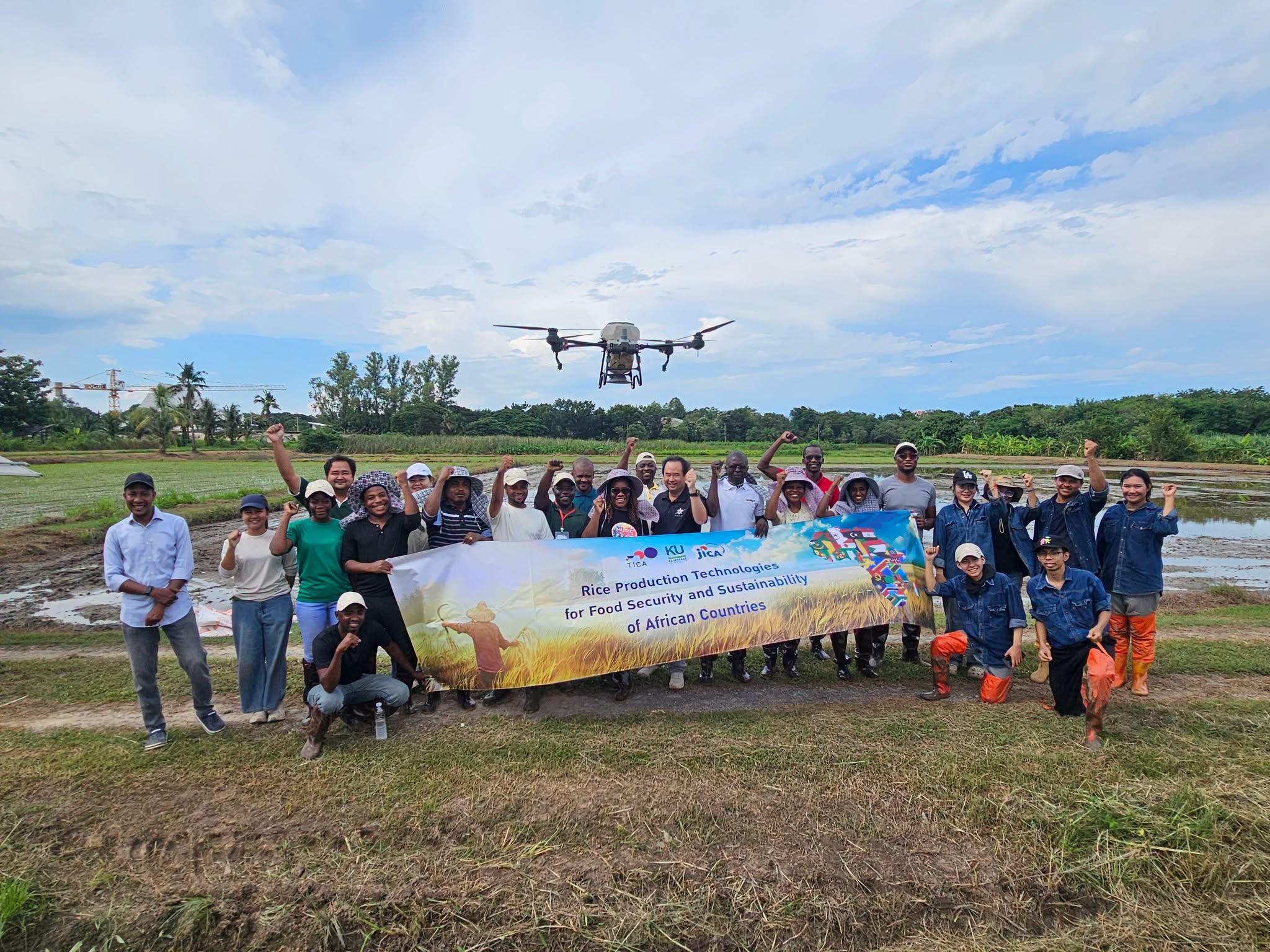
The international training course “Rice Production Technologies for Food Security and Sustainability of African Countries 2026 Batch 3,” organized by the Office of Extension and Training at Kamphaeng Saen, Kasetsart University, in collaboration with JICA and TICA, continues successfully.
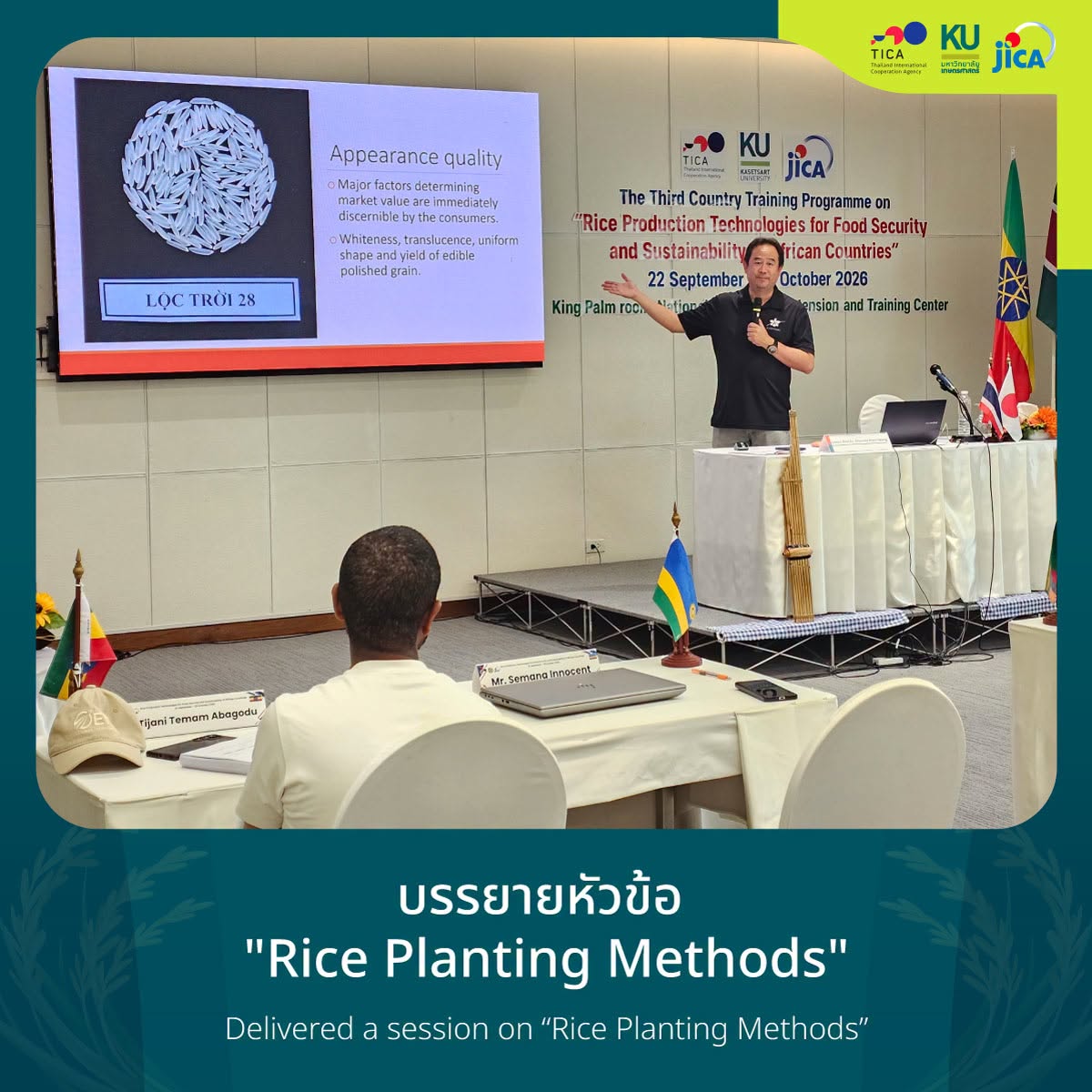
Delivered a session on “Rice Planting Methods” by Assoc. Prof. Dr. Chanate Malumpong from the Department of Agronomy, Faculty of Agriculture at Kamphaeng Saen, key knowledge, guidelines, and important rice planting techniques were shared:
Key Highlights:
1. Upland Rice: Emphasizes the “dibbling/seed dropping” method (using a seed rate of 12-15 kg per rai with a spacing of 15-20 cm) or “row seeding” (using 15-20 kg per rai with a row spacing of 25-30 cm), followed by soil covering.
2. Direct Seeding: Dry Seeding:
◼︎ Sowing dry seeds onto prepared soil, suitable for rainfed areas.
◼︎ Wet Seeding: Sowing pre-germinated seeds into puddled mud or shallow standing water, suitable for irrigated areas.
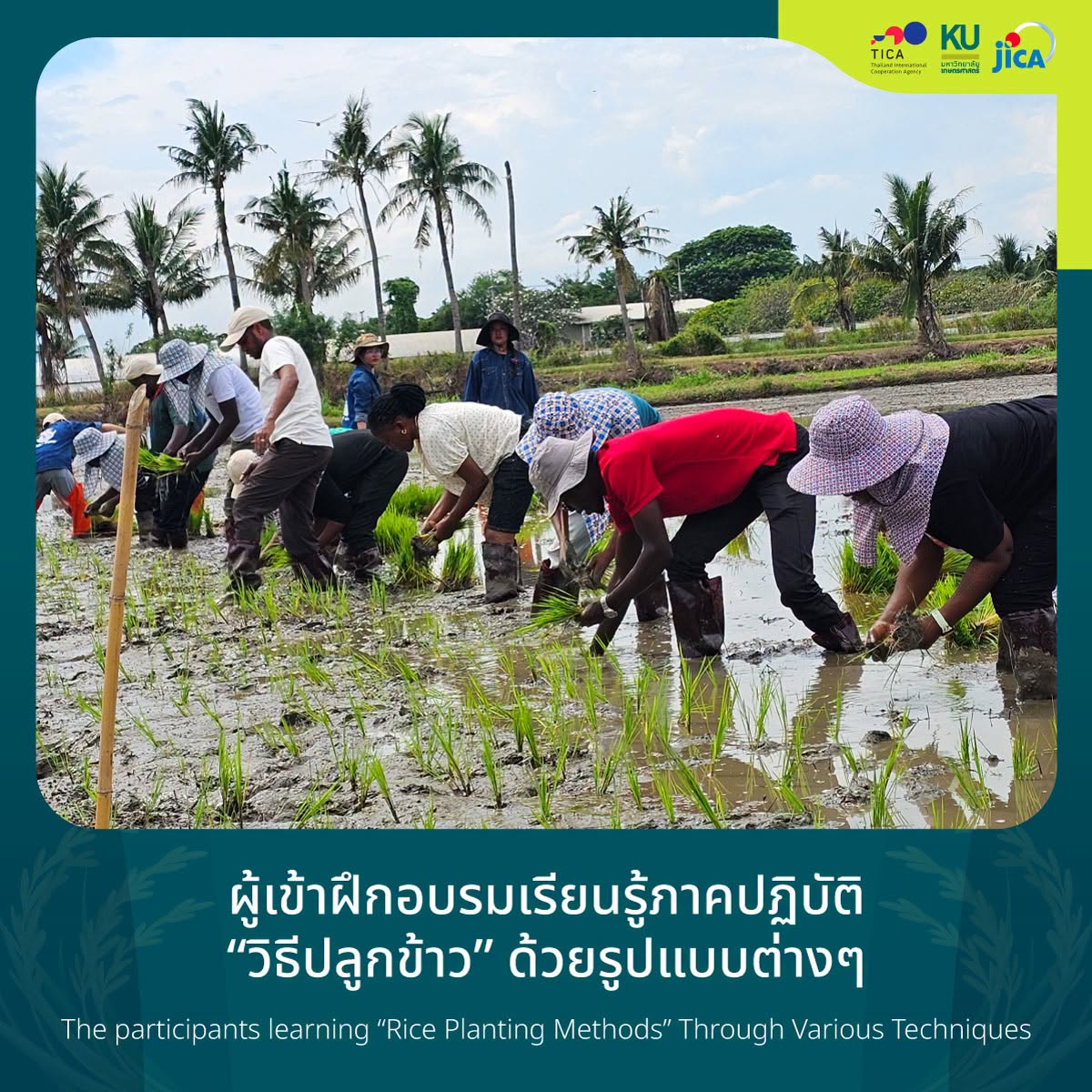
3. Transplanting: Includes traditional methods (using 20-30 day-old seedlings with a spacing of 25×25 cm), modern mechanical transplanting, and “mat-seedling broadcasting / seedling tossing” (using short-duration seedlings of 12-16 days), which saves labor and time.
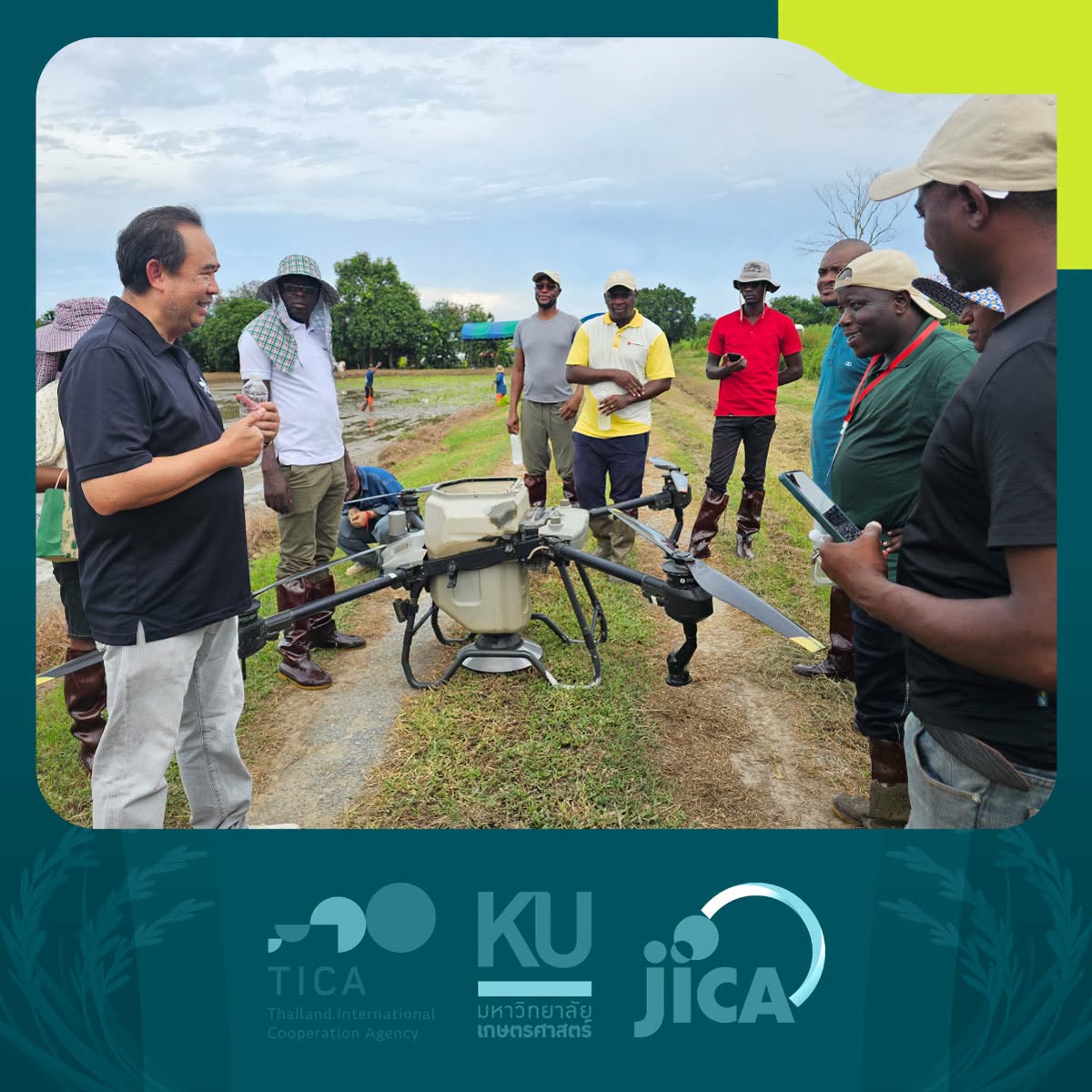
4. Modern Innovations and Machinery: Such as direct row seeders (multi-crop planters) and seed coating technology using calcium peroxide (CaO₂) to help seeds germinate well even in deep-water fields.
Reflections from Participants: During the Recap & Reflection session, Mrs. Oluwatoyin Abosede Babayemi, a representative from Nigeria, shared perspectives on rice cultivation patterns and methods supporting rice farming in her country:
Upland Rice: Mainly rainfed, commonly using dibbling or row planting (with a seed rate of 40-50 kg per hectare), with some areas utilizing minimum tillage systems.
Lowland Rice: Flatlands or riparian areas with moisture and irrigation, commonly using transplanting (yielding high results with good weed control) and direct seeding (requiring a relatively high seed rate of 80-100 kg per hectare).
Modern Trends: Large-scale farms are starting to adopt machinery such as tractors, row seeders, and agricultural drones to enhance efficiency and address labor shortages.
Views: 5

