
Thailand Rice Production Economy and Policy toward a Sustainable Rice Platform
Advancing Thailand’s Rice Economy and Policy toward Sustainable Production
Thailand Rice Production Economy and Policy toward a Sustainable Rice Platform
Sustainable development of Thailand’s rice industry requires more than increasing yield per unit area. It also calls for stronger market competitiveness, efficient resource management, reduced environmental impacts, and improved livelihoods for farmers throughout the rice value chain.
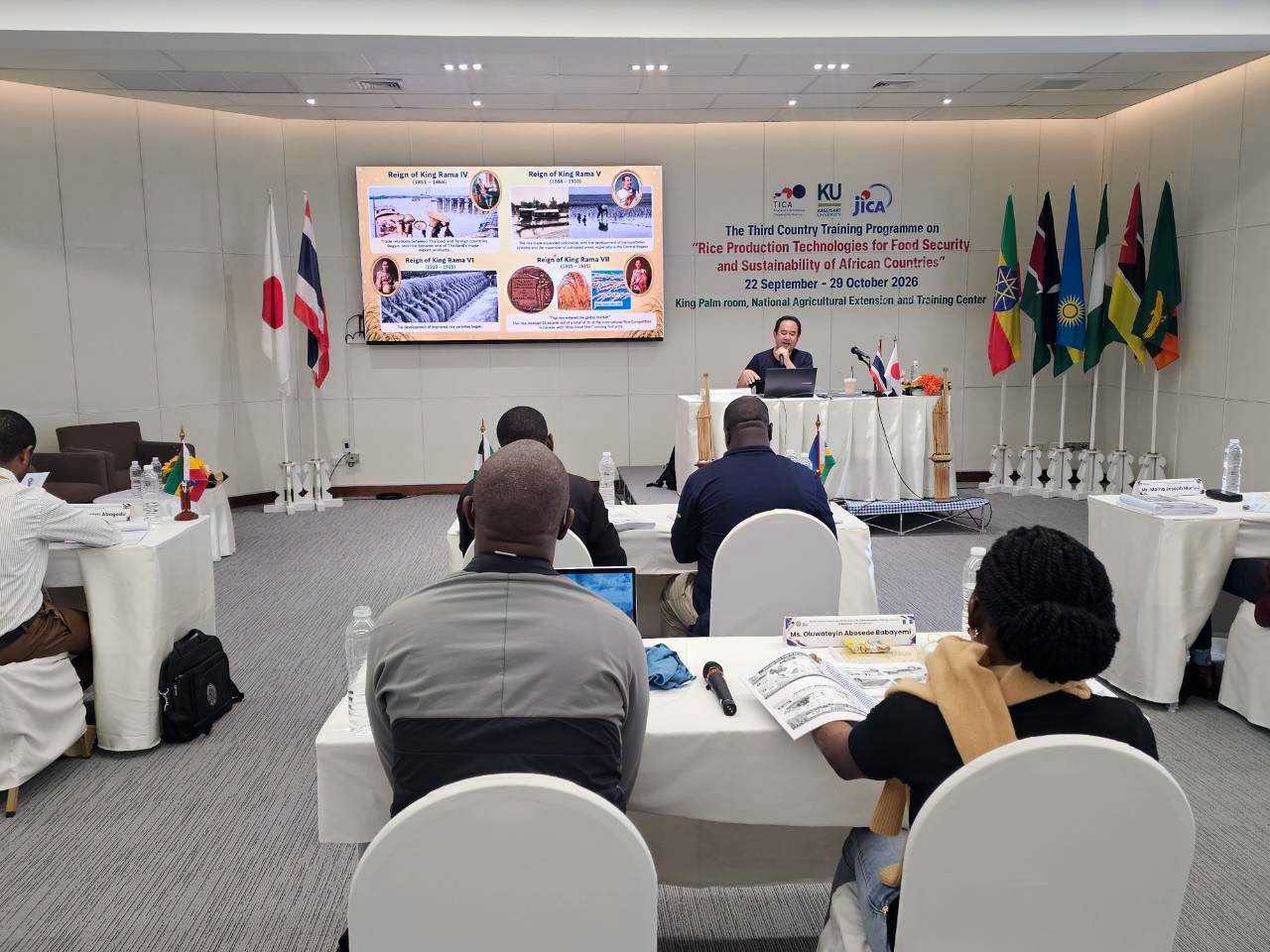
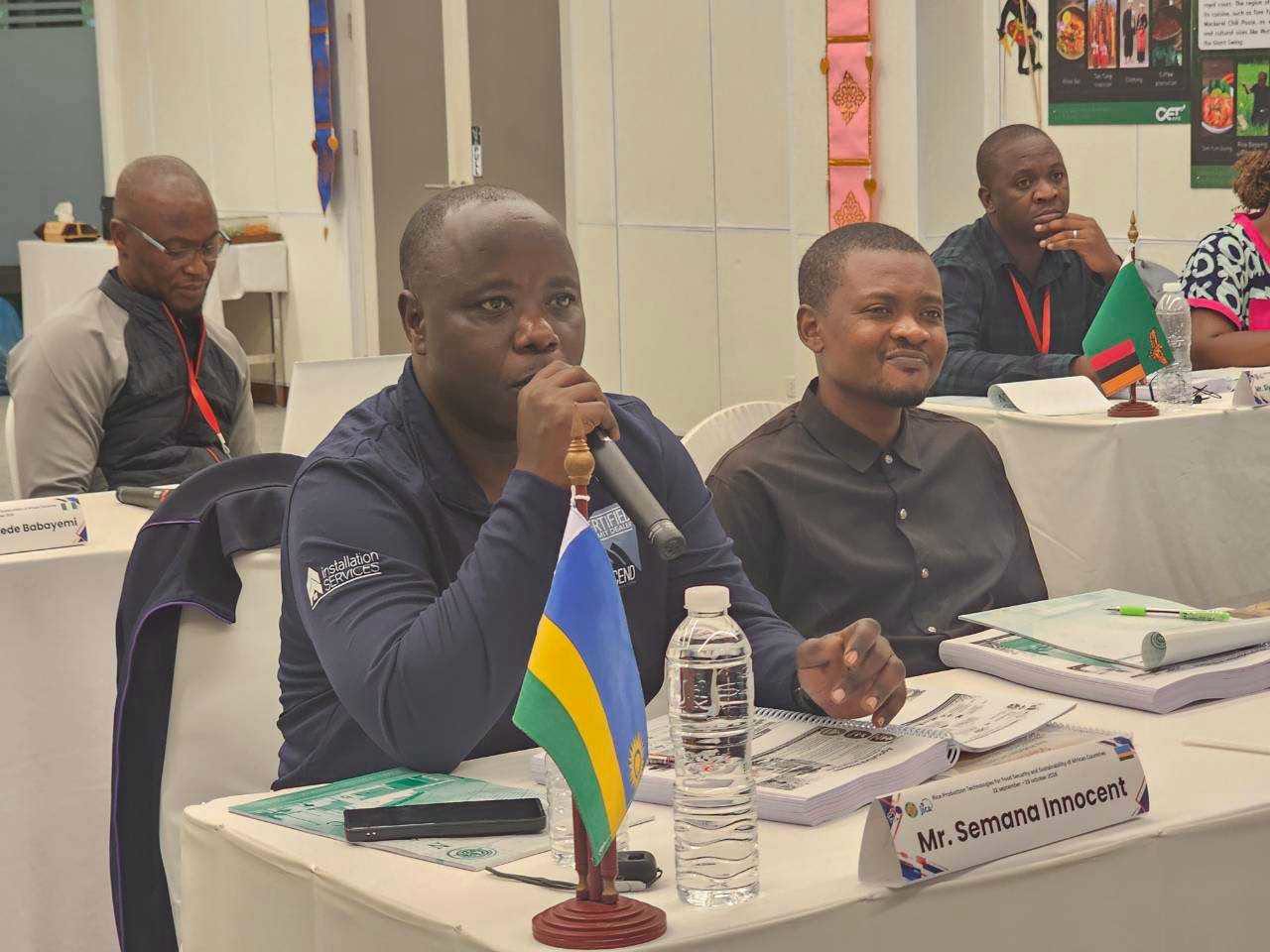
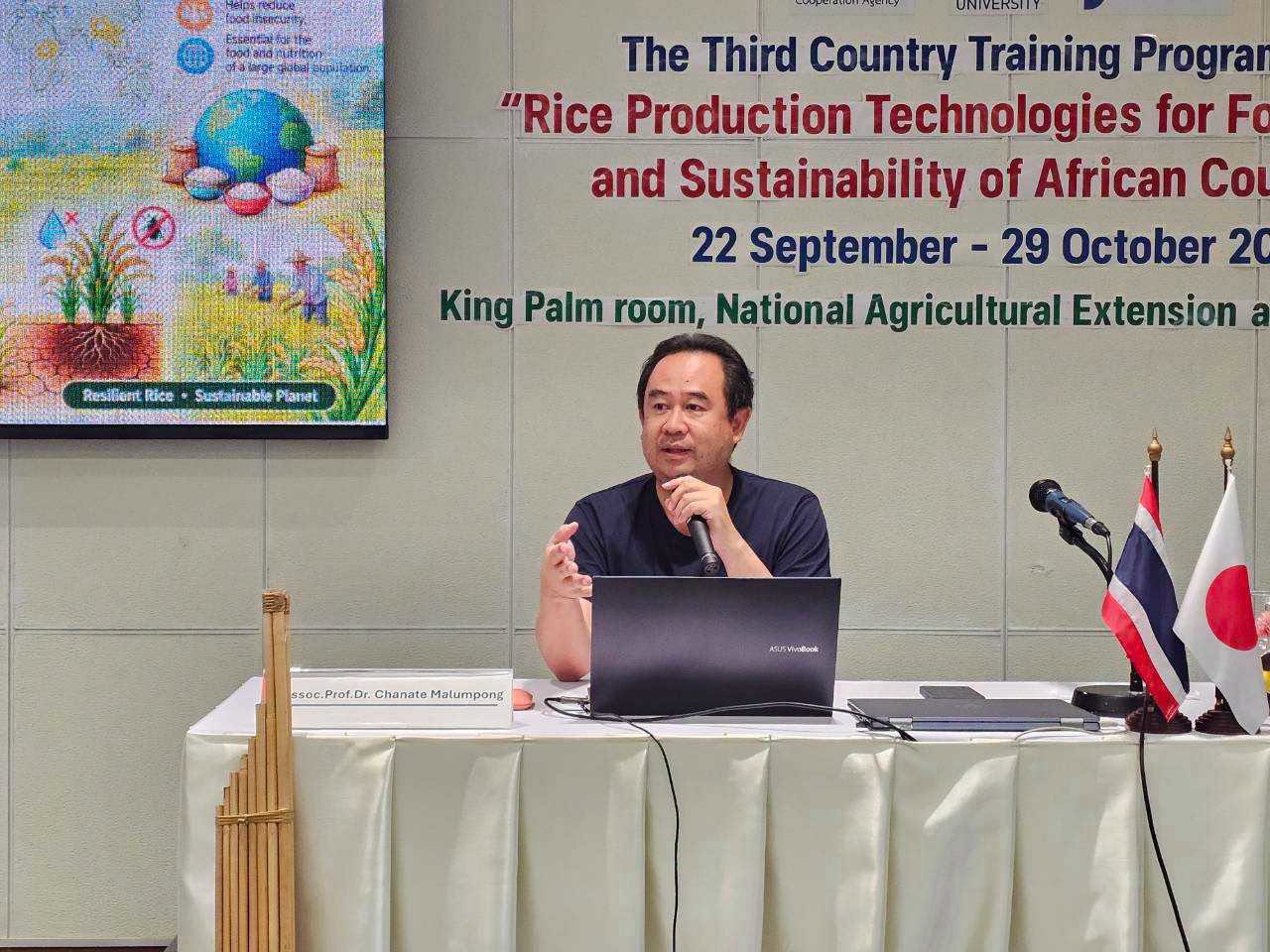
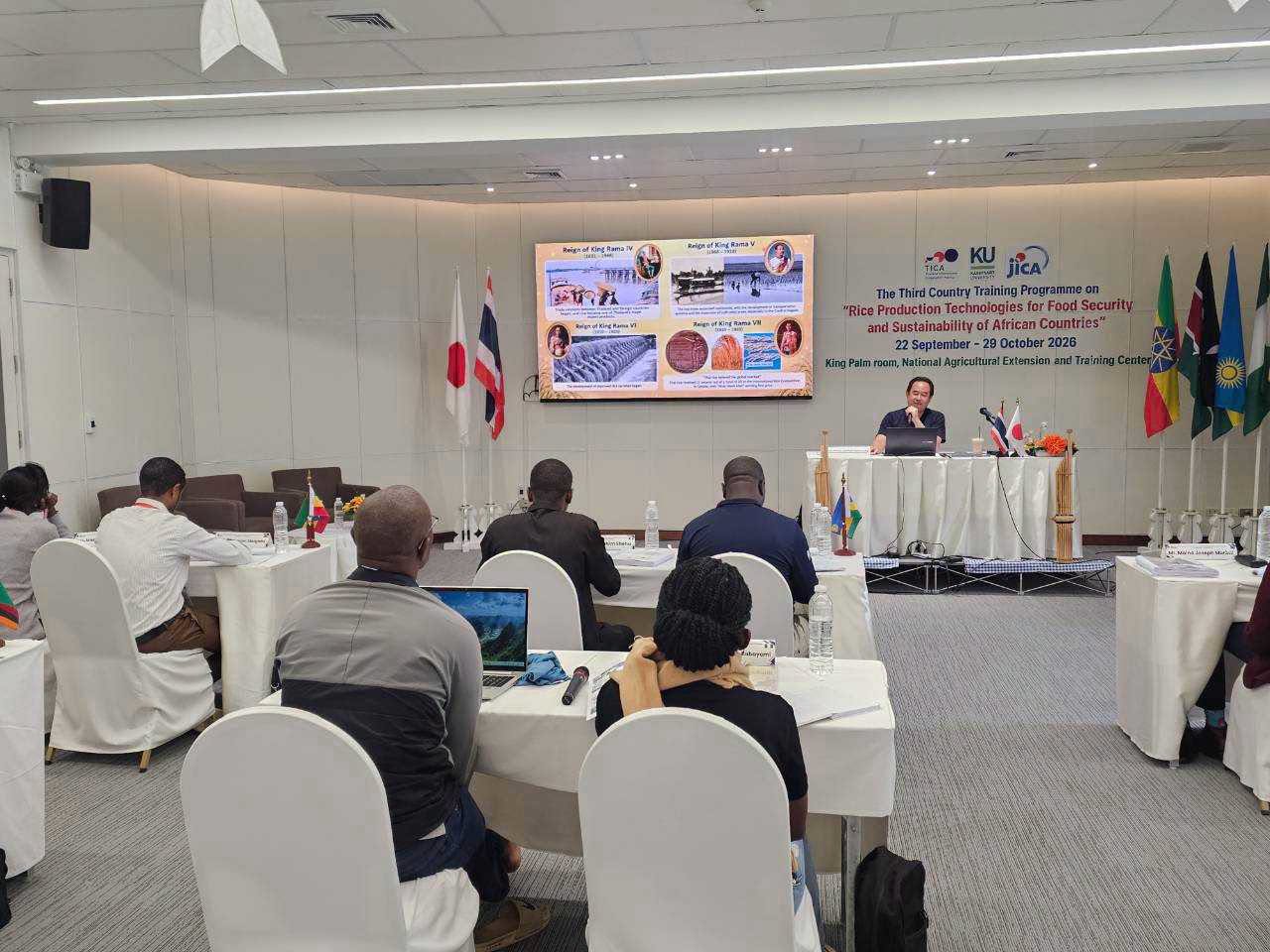
As part of the Rice Production for Food Security and Sustainability of African Countries training programme, The Office of Extension and Training Kamphaengsaen organized a lecture entitled “Thailand Rice Production Economy and Policy toward Sustainable Rice Platform,” delivered by Assoc. Prof. Dr. Chanate Malumpong.
The session provided an overview of Thailand’s rice production, market structure, export sector, and key challenges facing rice producers amid global economic changes, evolving consumer demand, and climate change.
Key strategies for advancing Thailand’s rice sector include:
➢ Developing low-carbon rice production systems
➢ Reducing costs and improving production efficiency
➢ Promoting agricultural technology and innovation
➢ Creating value-added rice products and strengthening market development
➢ Enhancing farmers’ income and competitiveness in global markets
The lecture emphasized that sustainable rice development must be pursued through an integrated approach—from farm-level production, soil and water management, and greenhouse-gas mitigation, to quality improvement, standards, and market development. Such an approach can help balance economic growth, social well-being, and environmental sustainability.
This learning session strengthened participants’ systems perspective and supported the adaptation of sustainable rice production approaches to the specific contexts of their respective countries.
Post Views: 7

