
Summary of 6 African Nations: Africa Rice Country Report
Summary of 6 African Nations: Africa Rice Country Report
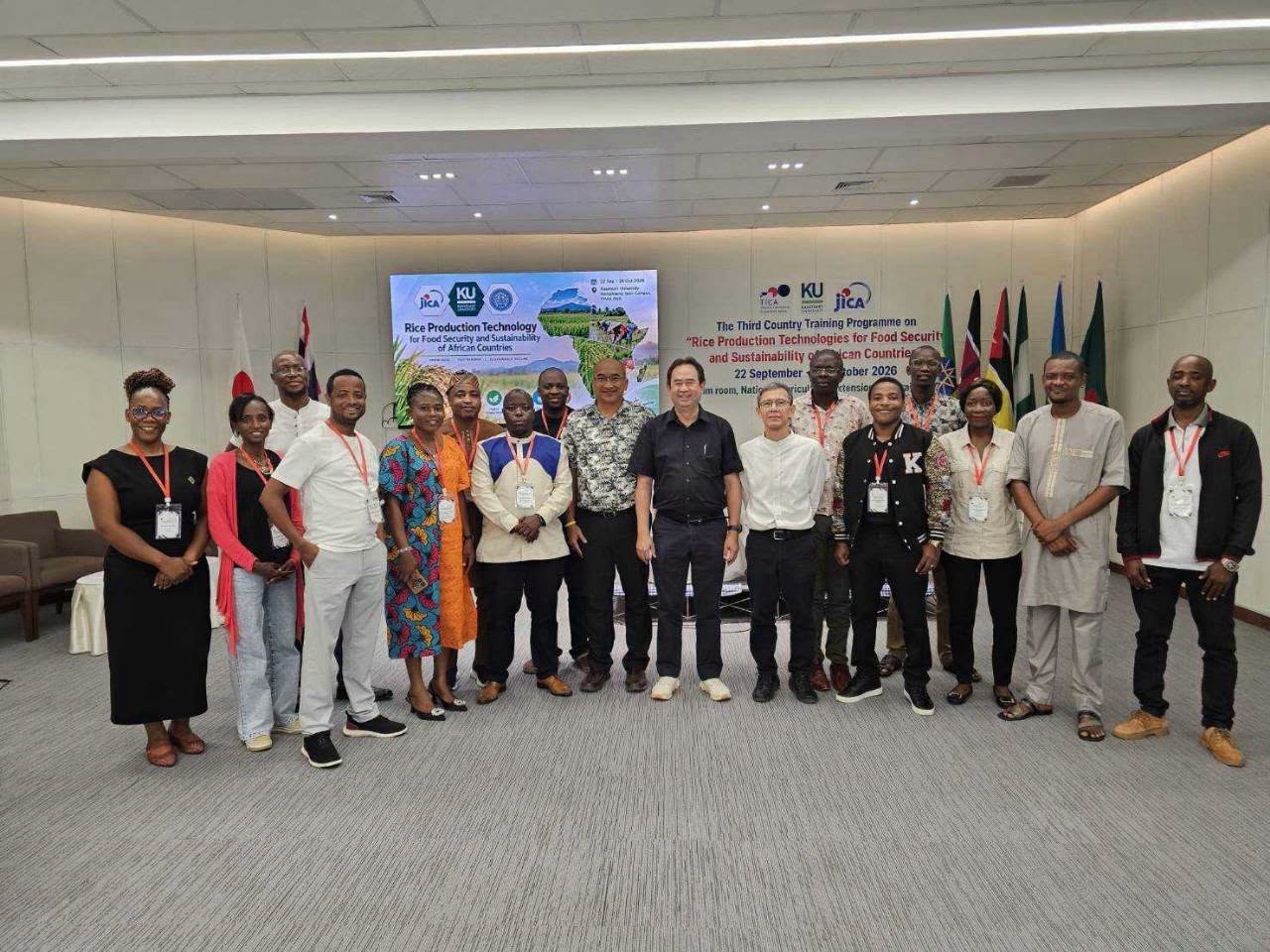
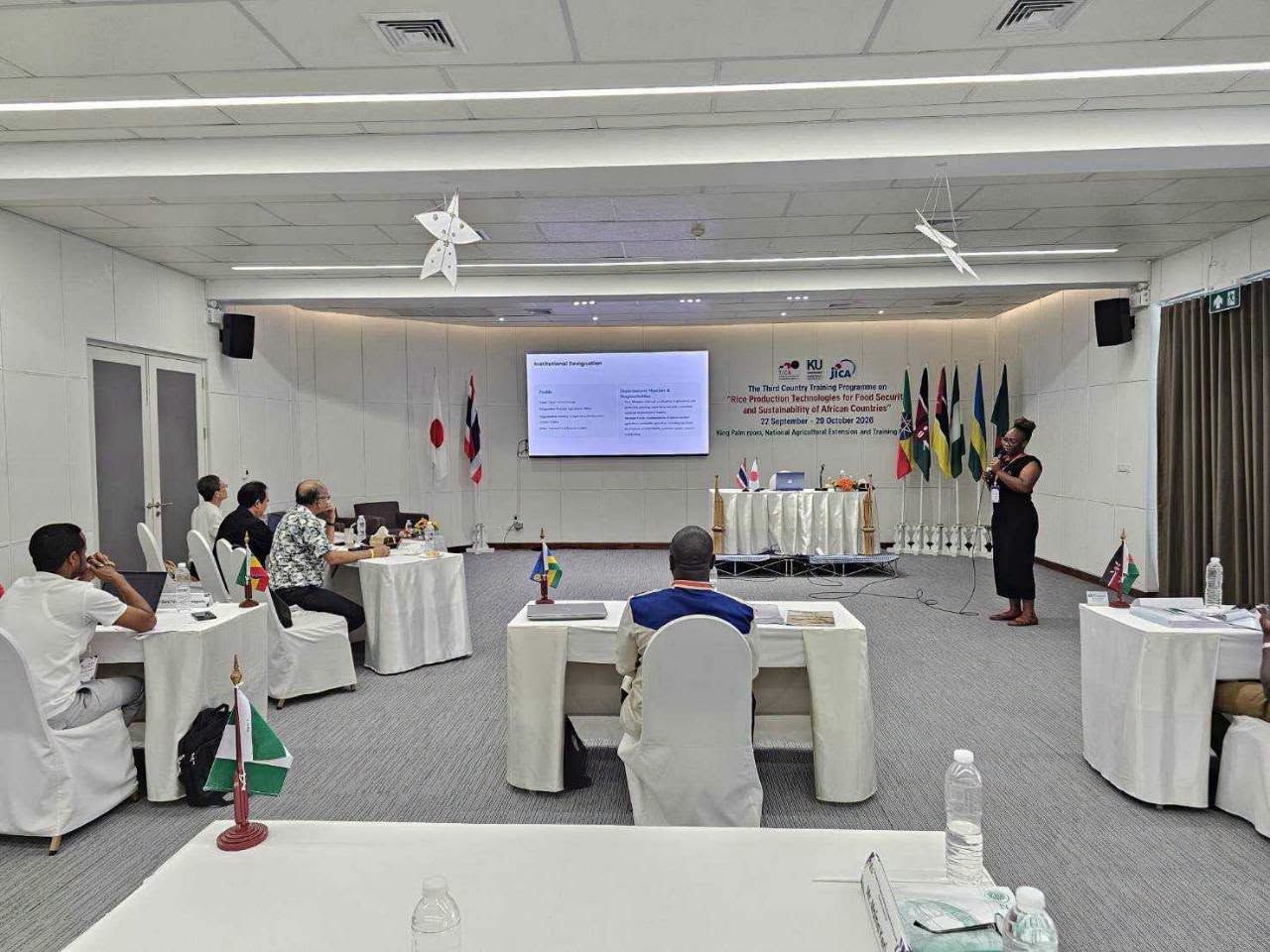
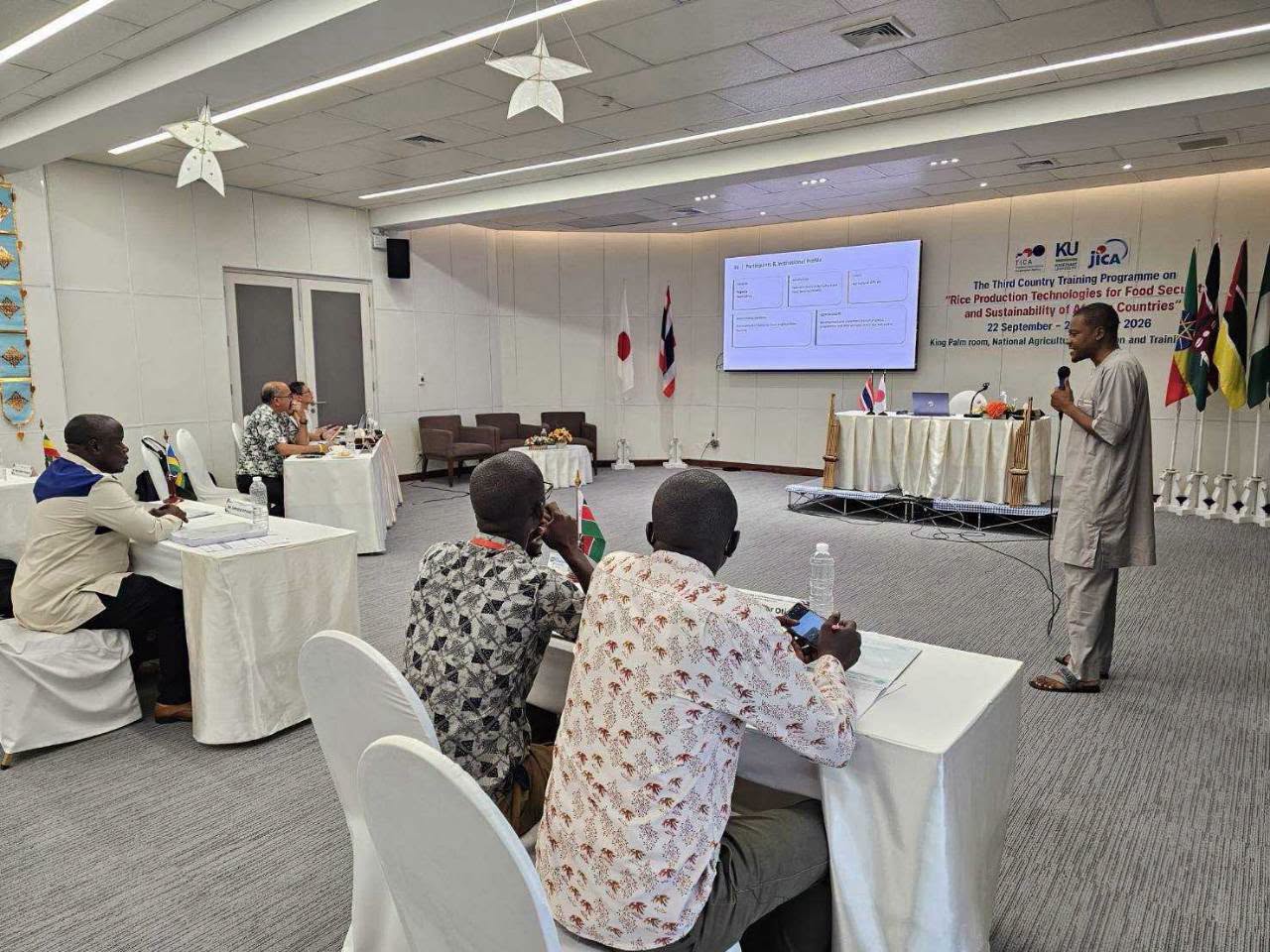
Representatives and agricultural experts from six African countries (Ethiopia, Kenya, Mozambique, Nigeria, Rwanda, and Zambia) are participating in the international training course “Rice Production Technologies for Food Security and Sustainability of African Countries 2026 Batch 3,” organized by OET KPS, Kasetsart University, in collaboration with JICA and TICA, to study Thailand’s rice production technologies and apply them in their home countries.
Overview of Rice Development Goals and Country Data All six countries face similar agricultural challenges, such as irrigation constraints, climate change, and domestic production deficits relative to consumption demand. Their key strategic directions include:
1. Ethiopia: Promotes rice as a strategic crop under the National Rice Flagship Program to substitute imports and ensure food security.
2. Kenya: Focuses on enhancing efficiency within the core Mwea irrigation scheme, while the utilization of agricultural drones for chemical pest management is still at the inception stage.
3. Mozambique: Emphasizes developing irrigation systems and engaging the private sector to link smallholder farmers to markets for increased income.
4. Nigeria: A major producer targeting 100% self-sufficiency by 2030 through sustainable production policies and technologies.
5. Rwanda: Accelerates the rehabilitation of marshland infrastructures and utilizes the NRDS2 strategy to upgrade the supply chain and promote low-carbon rice farming.
6. Zambia: Drives sustainable rice production through the CARD network and collaborative projects with JICA to boost yields and market systems.
Expectations Toward Practical Implementation During this training, all participants go beyond theoretical learning by focusing on gaining hands-on experience from Thailand in Modern Rice Farming, rice breeding, soil and water management, post-harvest machinery technology, and value-added processing. They intend to apply these insights to drive policies and scale up development projects in their home countries.

Post Views: 17

