Rice Value Chain: From Production to Value Creation
Sustainable rice development cannot focus solely on farm-level production. It requires an integrated understanding of the rice value chain—from farmers and agricultural inputs to collection, milling, processing, product development, marketing, and consumers.
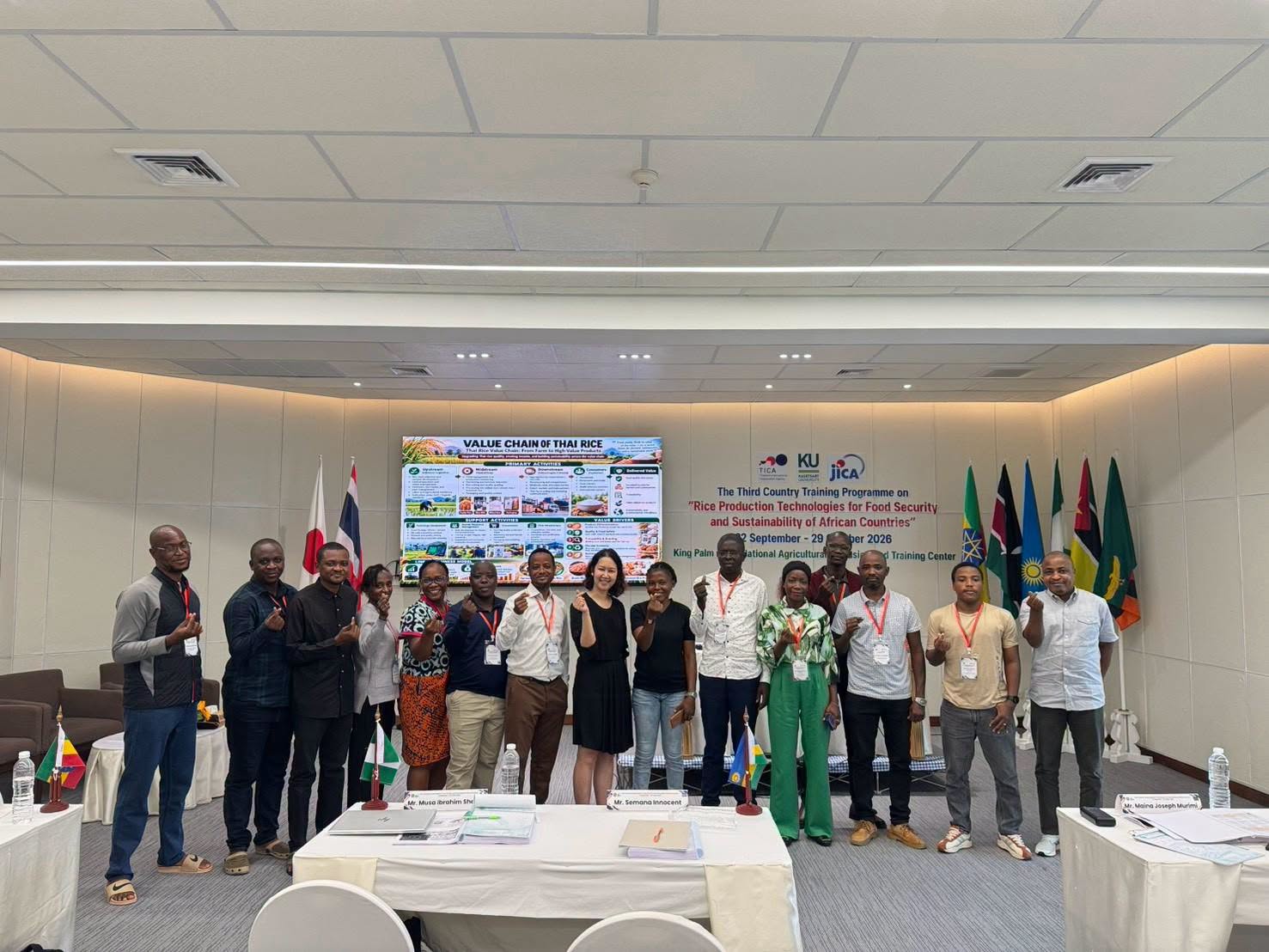
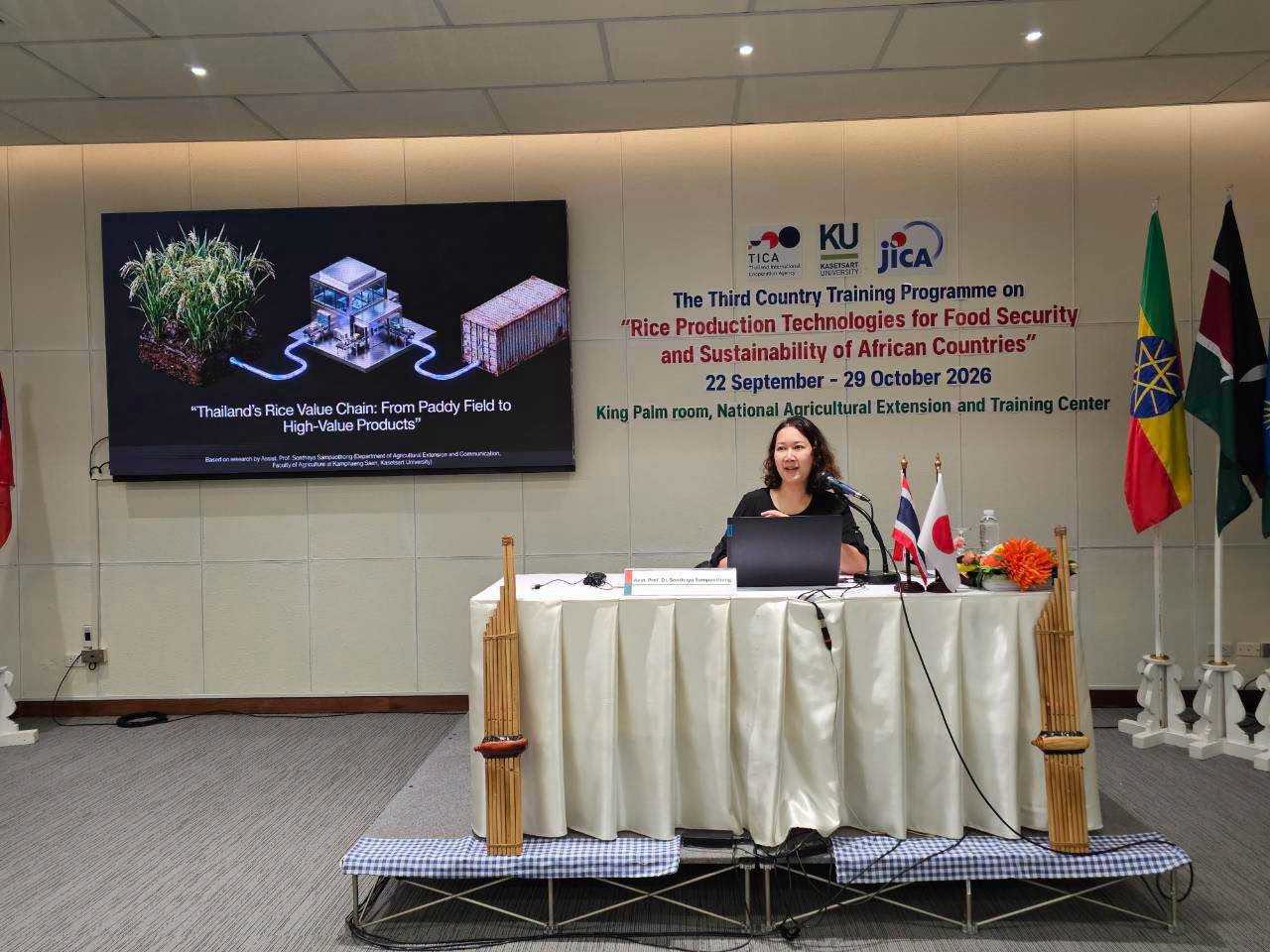
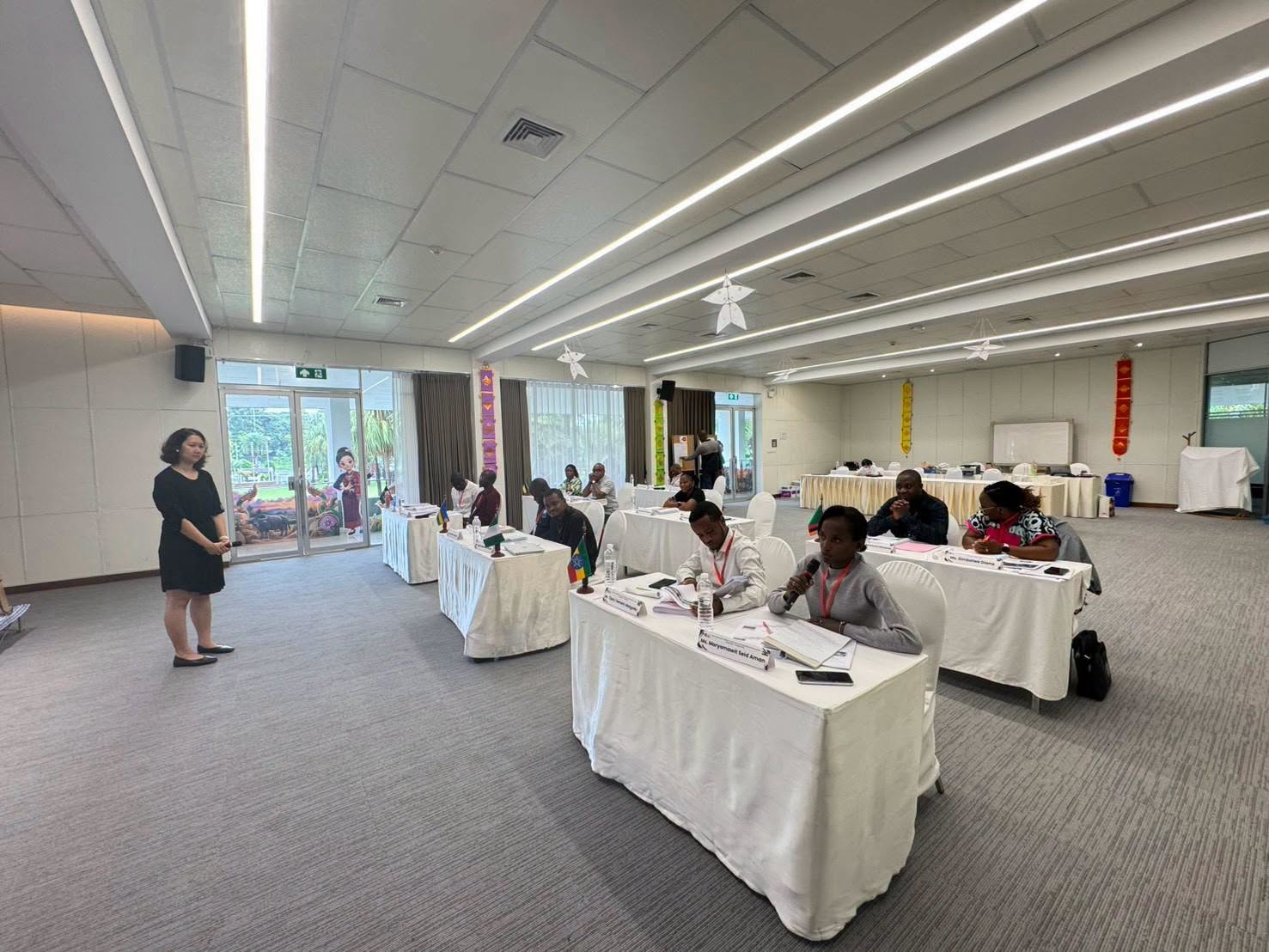
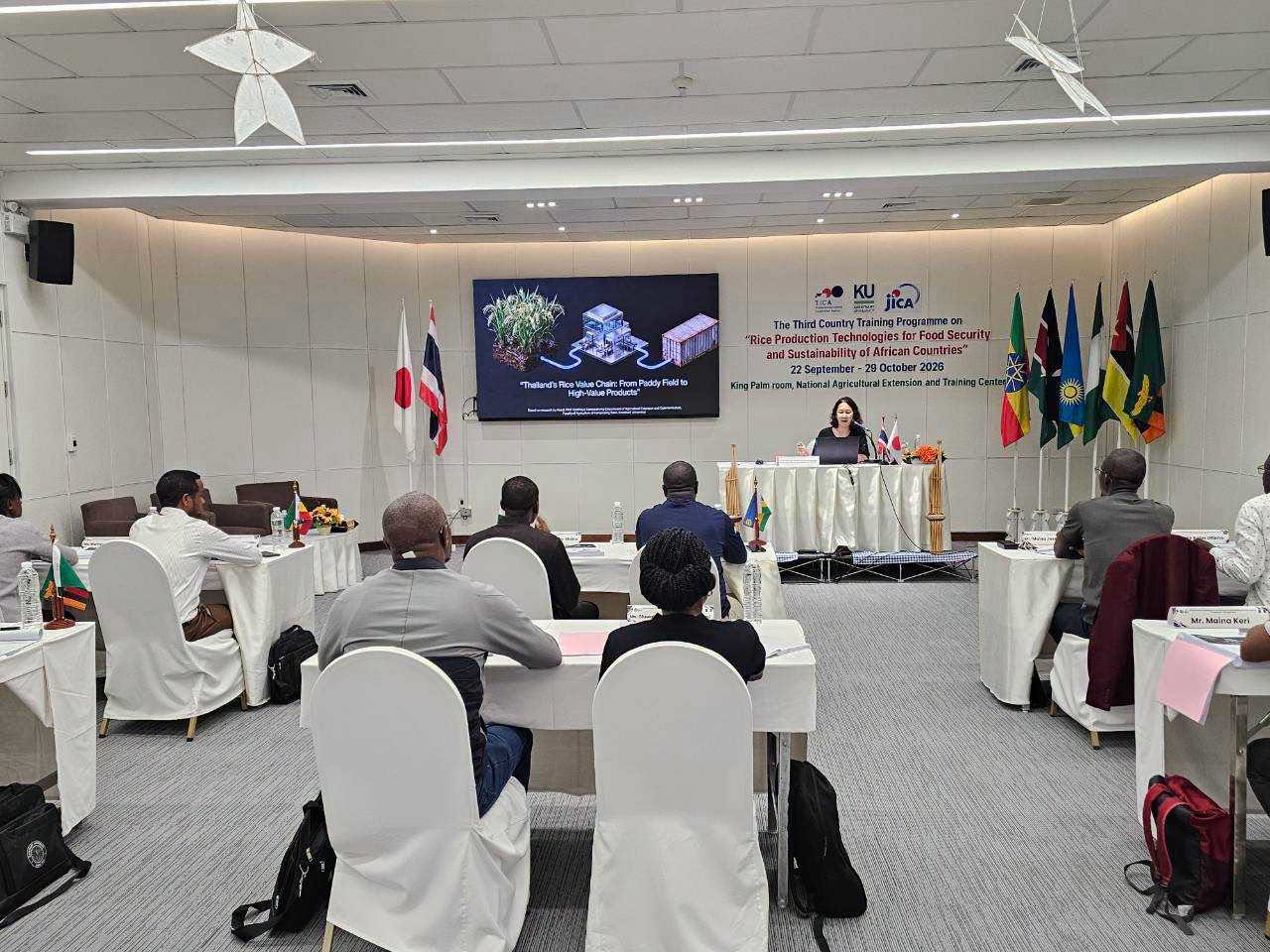
As part of the Rice Production for Food Security and Sustainability of African Countries training programme, The Office of Extension and Training Kamphaengsaen organized a lecture entitled “Rice Value Chain,” delivered by Asst. Prof. Dr. Sonthaya Sumpaothong.
The session introduced the three main stages of Thailand’s rice value chain: the upstream sector, covering farmers and rice production; the midstream sector, including collection, milling, and processing; and the downstream sector, which connects rice products with domestic and export markets.
Participants also learned about the diversity of Thai rice across regions, including Hom Mali rice in the Northeast, glutinous rice in the North and Northeast, and white rice in the Central region. This diversity is a key strength for developing distinctive products that respond to specific market needs.
The discussion highlighted key challenges, including post-harvest losses, the limitations of relatively small farm holdings, and the need for stronger coordination among stakeholders throughout the supply chain.
Looking ahead, Thailand’s rice sector needs to move beyond competition based primarily on volume and price toward greater value creation through geographical indication (GI) rice, organic rice, health-oriented rice products, and environmentally friendly production systems. These approaches can strengthen farmers’ incomes and enhance competitiveness in a sustainable manner.