
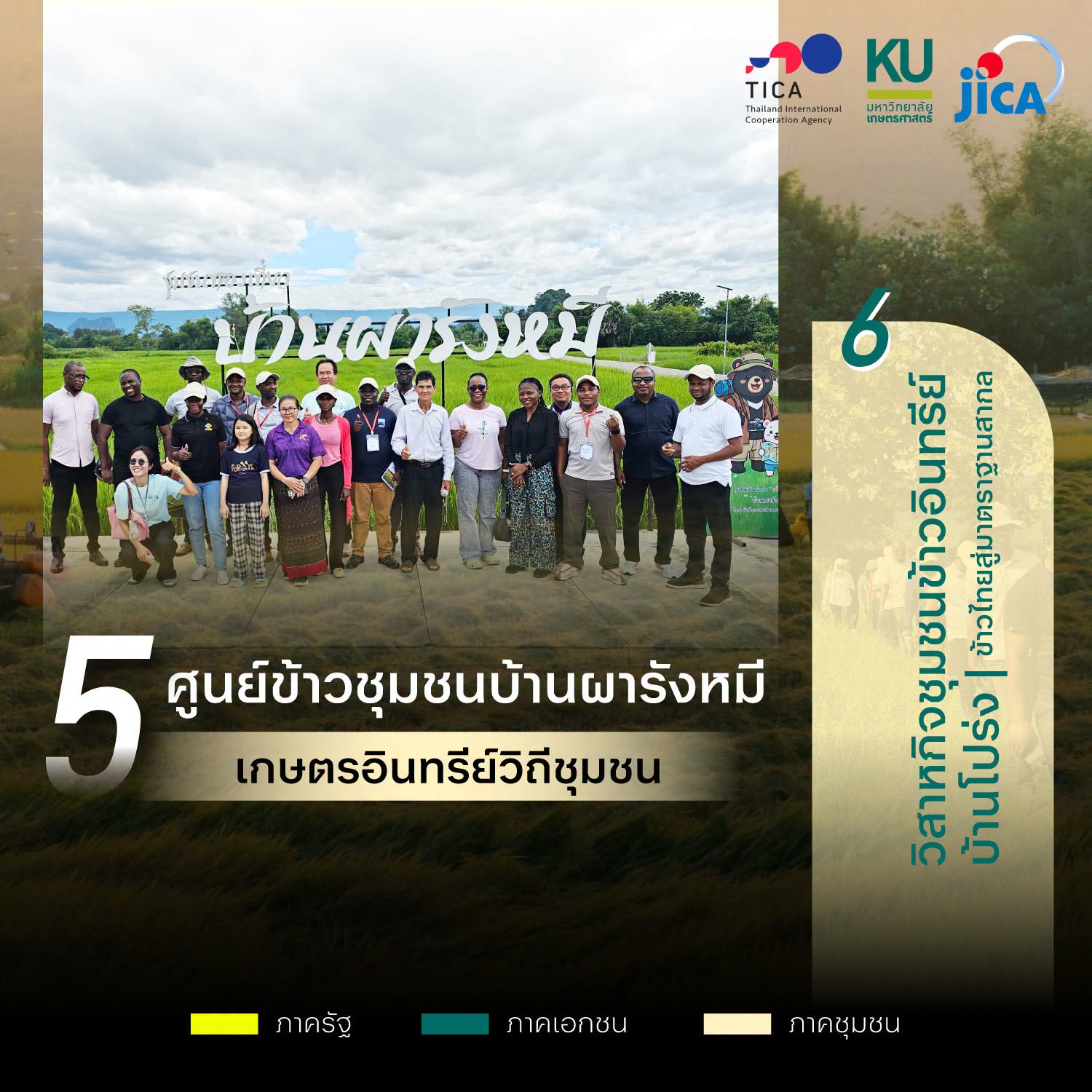
Study visit & Execution | Series Ep.5 : Discovering "Ban Pha Rang Mi Community Rice Center": A Model of Large-Scale Paddy and Chemical-Free Rice Farming in Phitsanulok! on a study visit to Noen Maprang District
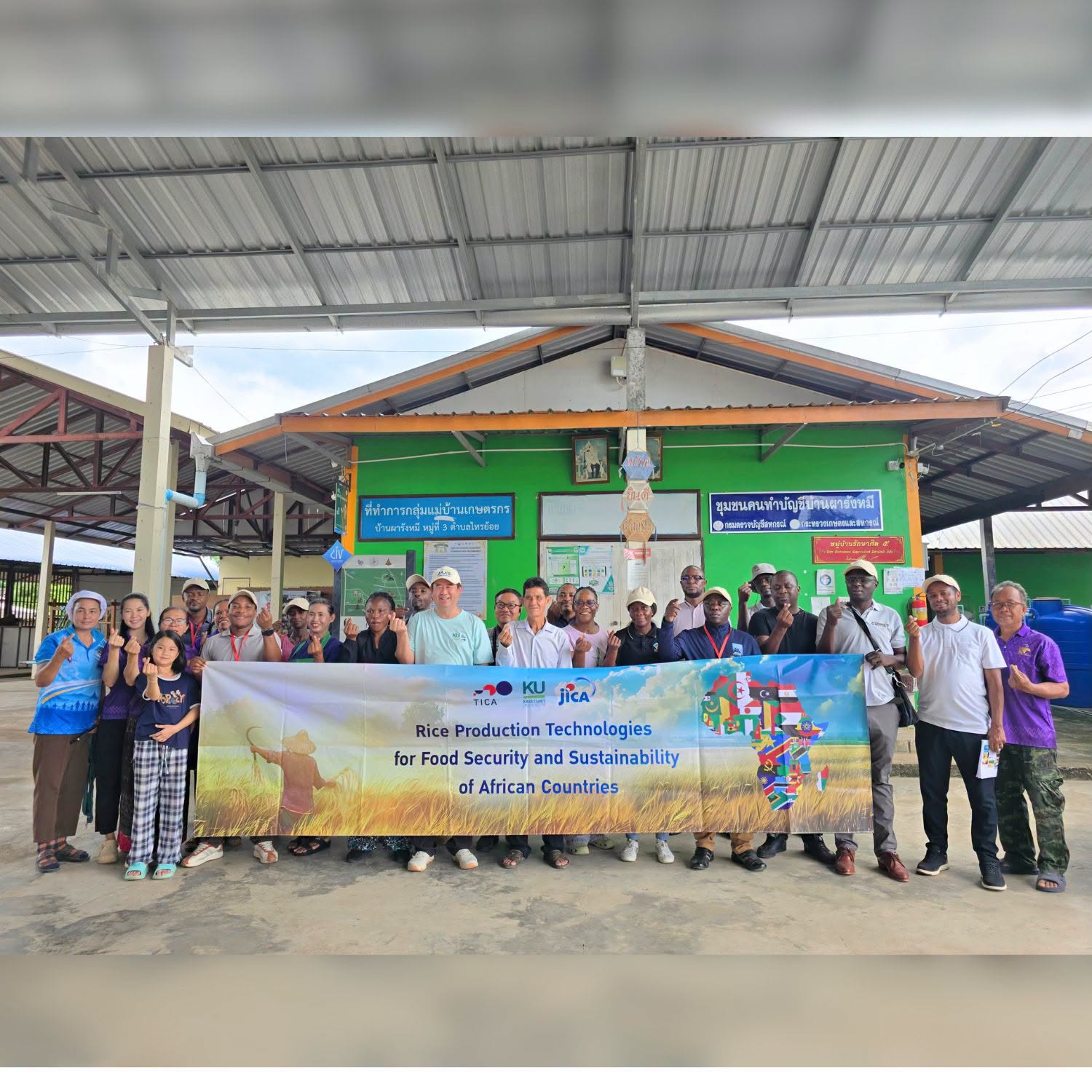
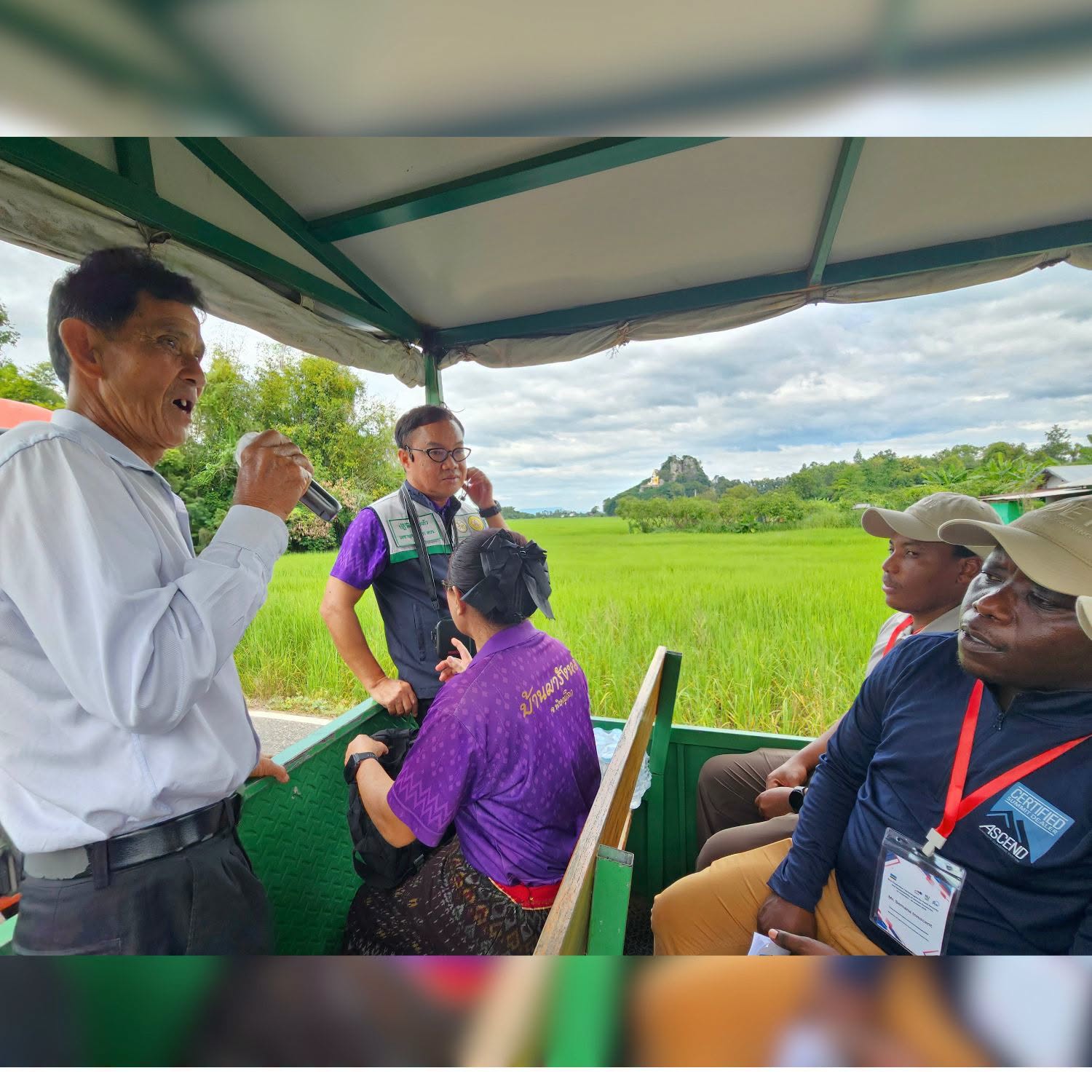
The international training course “Rice Production Technologies for Food Security and Sustainability of African Countries 2026 Batch 3”, organized by the Kamphaeng Saen Extension and Training Center at Kasetsart University in collaboration with JICA and TICA, brought participants to learn about the success of the Ban Pha Rang Mi Community Rice Center, a model farming community that has transformed paddy fields surrounded by limestone mountains into “chemical-free rice” production for sustainable income generation.
Key Highlights of Ban Pha Rang Mi Community Rice Center:
– Integrated Production and Processing: Grouping together for large-scale farming, complete with a community rice mill for processing and direct sales.
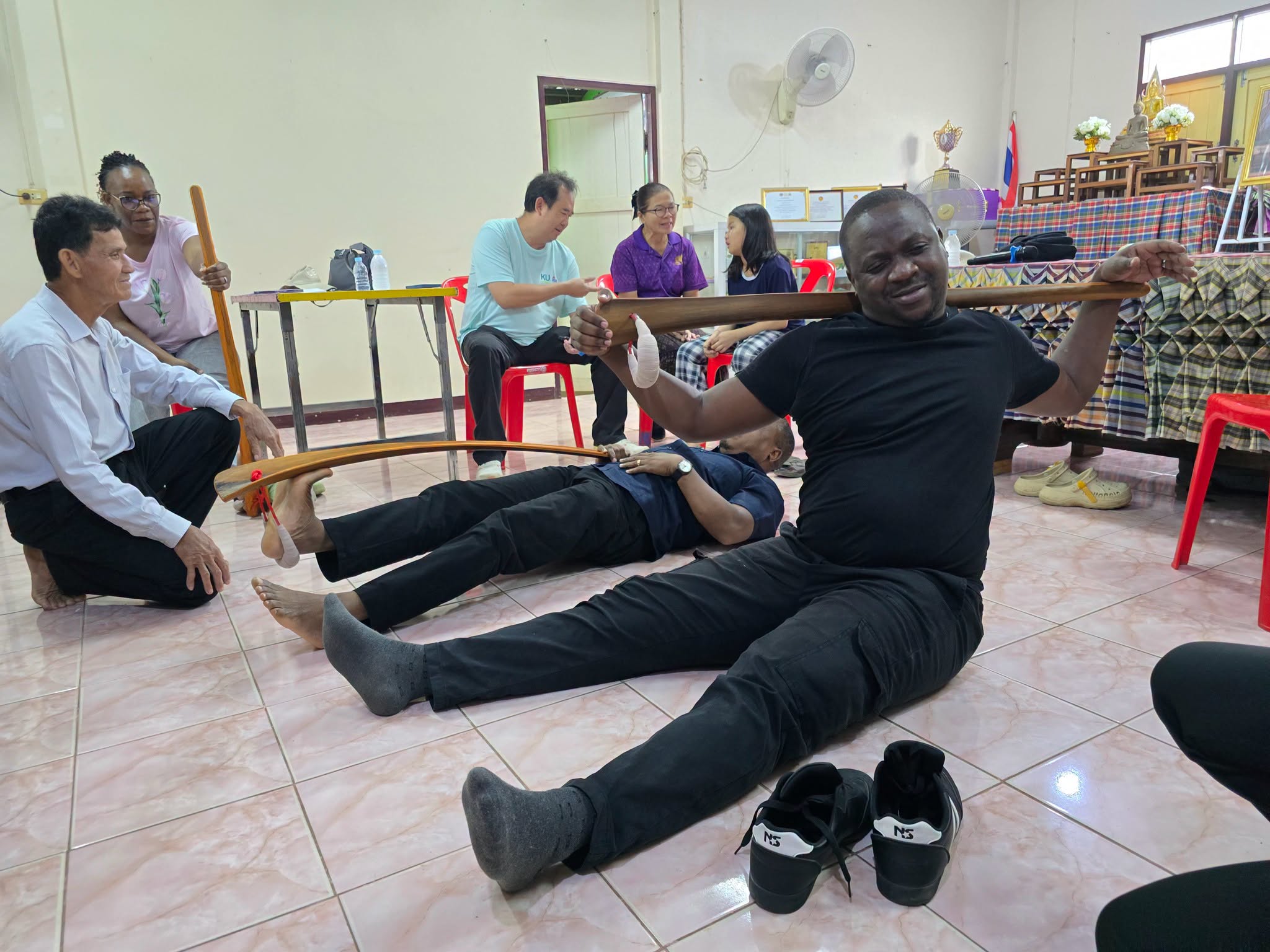
– Extending Innovative Tourism: Operating as an organic agriculture learning center, homestay, and local wisdom activity hub (such as traditional Khao Tom Daek snacks, mat weaving, and textile weaving).
– Conserving Rice Culture: Preserving traditional merit-making ceremonies for rice and blessing rituals to foster community unity.
Reflections from Participants: Following the study visit, the delegate from Kenya shared inspiring insights and takeaways for future application:
– Activities and Value Addition: Interested in chemical-free rice cultivation, fruit tree growing, agro-tourism, and value-added processing such as rice cookies and mango beverages.
– Thailand-Kenya Comparison:
– Similarities: Both countries grow fragrant rice and mangoes, and have middlemen in the value chain.
– Differences: Thailand is more advanced in rice value addition and has stronger community rice centers and cooperative systems, whereas Kenya only has rice cooperative associations.
This study visit broadens horizons in value chain development and community self-reliance to drive global sustainability
Views: 26

